Operation Market Garden starts on September 17, 1944.82nd Airborne DivisionAirborne Division that carried out the heroic Waal crossing on September 20, which resulted in the bridges falling into Allied hands.
16 – James Gavin
80 years of freedom
General Gavin and Captain Bestebreurtje: leadership and bravery during Operation Market Garden
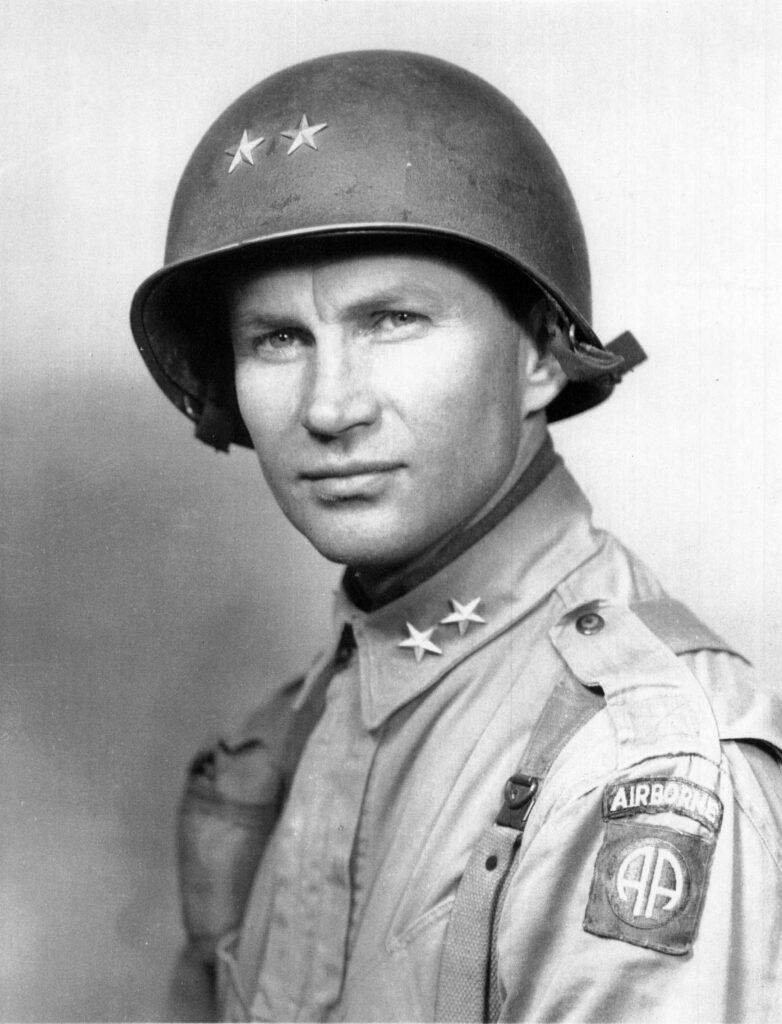
The82nd Airborne Division was led by General James Gavin. He was the youngest brigadier general in the American army; during Operation Market Garden, he was only 37 years old. Gavin had risen so high because he was a born leader. He was very well-liked by his men, was very brave, and knew how to inspire that in others. Gavin always preferred to participate in the battle himself, together with his unit, and earned the nickname 'the jumping general' because he jumped into combat four times with his paratrooper unit during World War II. During Operation Market Garden, Gavin had a Dutch captain as his right-hand man: Arie Dirk Bestebreurtje was a volunteer in British service. He commanded a special 'Jedburgh team' tasked with establishing a link between the local resistance and the Allies. Bestebreurtje received this assignment because he knew Nijmegen well. He had family there and had walked the Nijmegen Four Days Marches several times before the war.
General James Gavin. Source: Freedom Museum
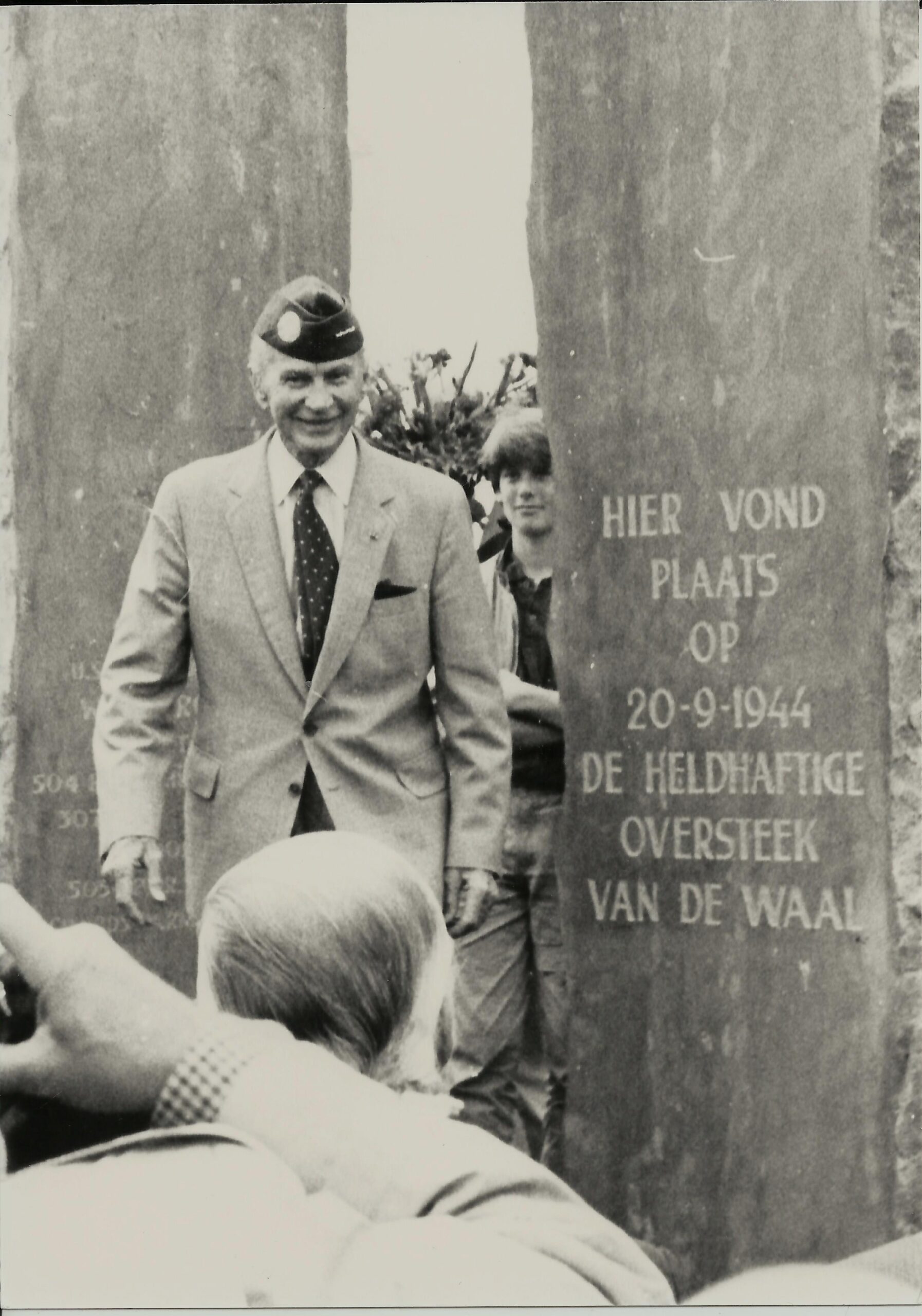
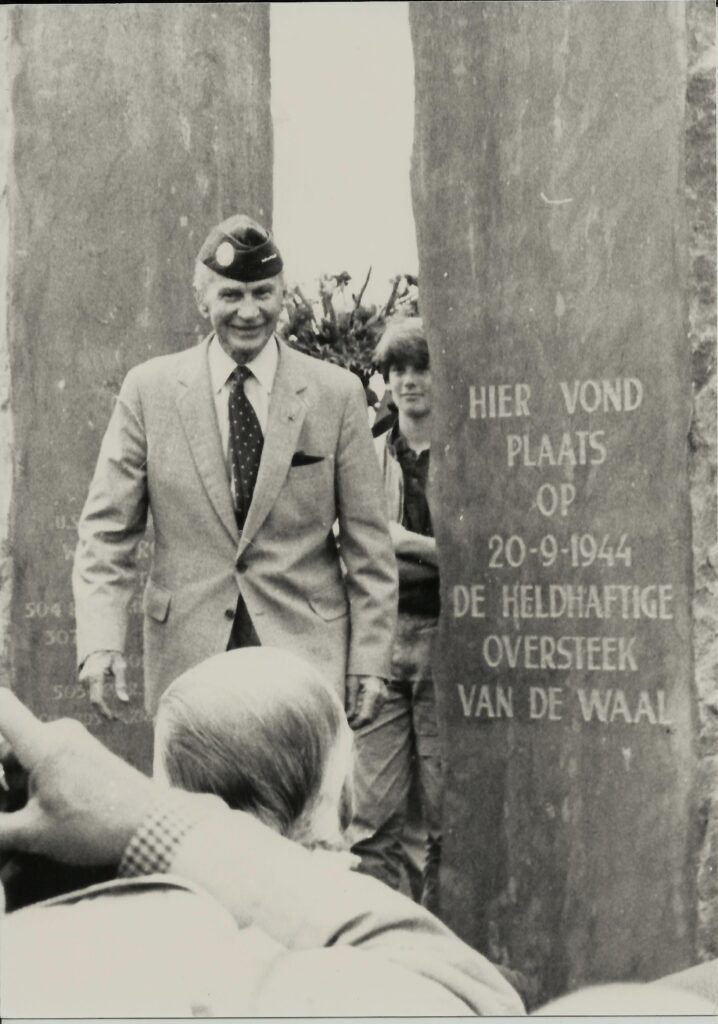
General Gavin in 1984 during the opening of the monument in honor of the Waal crossing. Source: Freedom Museum
General Gavin: The bond with Nijmegen and its heritage of freedom and equality
After the war, General Gavin maintained a strong bond with Nijmegen. When he returned to the United States, he initiated a relief effort in which the city of Albany (in New York State) 'adopted' the city of Nijmegen and sent large amounts of aid to Nijmegen through collections. The Albany Committee collected money, clothing, furniture and building materials for Nijmegen, with special attention to the recovery of the university. In 1947 Gavin was made an honorary citizen of Nijmegen.
In the military, Gavin was a driving force in ending racial segregation in the U.S. military and under his leadership the 82nd Airborne became the first integrated division.
Until his death in 1990, Gavin continued to return to Nijmegen regularly for memorial services. He also supported the establishment of the Liberation Museum, now Freedom Museum, in Groesbeek in 1987.